

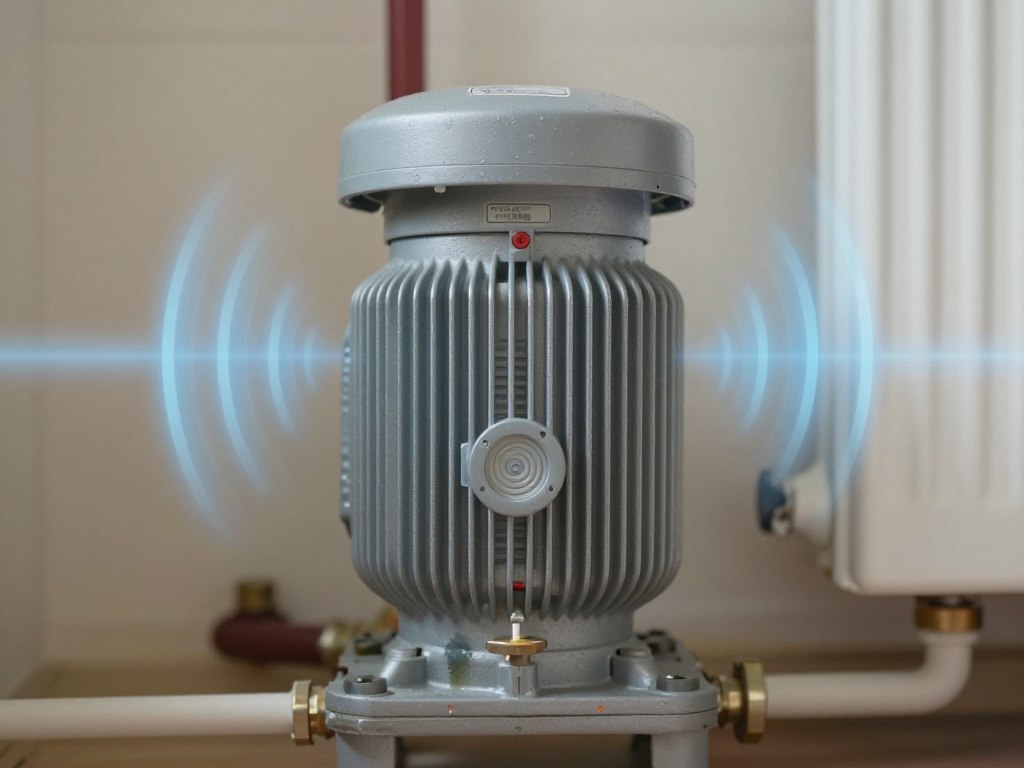
A noisy central heating pump is usually trapped air, limescale, sludge, the speed set too high, or a pump that’s simply worn out. Gurgling or a gentle hum is normally a five-minute DIY fix. Grinding, a leak, or a pump casing too hot to touch means switching off and calling a Gas Safe engineer.
What Does a Central Heating Pump Do?
The pump (engineers call it a circulator, most homeowners just call it the boiler pump) pushes hot water out of the boiler and round every radiator in the house. Take it out of the equation and the boiler can be running perfectly and your radiators will still be stone cold, because nothing is actually moving the water through the pipework.
A faint, steady hum while the heating is on is nothing to worry about. A noise that’s new, getting louder, or sounds different to how it used to is the one worth paying attention to.
A well maintained pump can run for well over 10 years, sometimes 20. How long yours lasts comes down to your water hardness, whether the system gets serviced, and how long it sits idle (over summer, for instance). UK and EU Ecodesign (ErP) rules have set a minimum efficiency standard for circulator pumps since 2013, tightened since, which is a big reason newer pumps, the Grundfos UPS3 range among them, run on variable speed and sit quieter than the older fixed-speed units still fitted in a lot of homes.
Energy Efficiency and Running Costs
An old fixed-speed pump stuck on a high setting all winter isn’t just louder, it’s burning more electricity than it needs to. A modern A-rated pump adjusts its own output to what the system actually needs, so it costs very little to run over a year. If yours is old, loud, and has no speed control, it’s worth asking your engineer whether replacing it makes more sense than just fixing the noise.
Where Is My Central Heating Pump Usually Located?
On most UK systems it’s right next to the boiler, either built into the casing on a modern combi, or fitted separately on the pipework nearby, in an airing cupboard, or under the stairs by the hot water cylinder. Not sure if the noise is the pump or the boiler itself? Put a hand near this area (carefully, and only on a cool bit of pipe) while the heating’s running. If the noise is loudest there, it’s the pump.
What Different Pump Noises Mean
Central heating pump noise almost always falls into one of these categories. Match yours to the table below, then read the relevant section further down for the fix.
| Noise Type | Likely Cause | Severity |
|---|---|---|
| Gurgling or bubbling | Trapped air (airlock) or low system water pressure | Low, usually a DIY fix |
| Humming or buzzing | Pump speed set too high, or worn bearings | Moderate |
| Banging or knocking | Debris hitting the impeller, water hammer, or trapped air | Moderate to high |
| Whining or high-pitched noise | Air movement under pressure, or the pump running under stress | Moderate |
| Vibrating or rattling | Loose mounting brackets or unclipped pipework | Low |
| Whistling or “kettling” | Limescale build-up on the heat exchanger | Moderate to high |
| Grinding or scraping | Worn bearings, a damaged impeller, or the pump running dry | High, needs urgent attention |
Other Signs Your Pump Has a Problem (Not Just Noise)
Noise isn’t the only tell. Match what you’re seeing to the likely cause:
| What You Notice | What It Usually Means |
|---|---|
| Radiators hot at the bottom, cold at the top | Trapped air |
| Radiators cold at the bottom, even with a hot top | Sludge or debris build-up |
| House takes noticeably longer to warm up than it used to | Reduced flow, usually sludge, limescale or a tired pump |
| Boiler keeps cutting out or restarting on its own | Poor circulation, often pump-related |
| Hot water works fine, but radiators stay cold | Circulation problem, not a boiler fault |
| Pump casing unusually hot to the touch | Motor under strain, possible overheating |
A central heating pump not working at all, rather than just sounding off, usually means an electrical fault, a seized motor, or a blown fuse, and it’s worth booking an engineer straight away.
Common Causes of a Noisy or Failing Pump
| Cause | Typical Fix |
|---|---|
| Sludge and debris (magnetite) | Magnetic filter, or a power flush for existing build-up |
| Airlocks | Bleed the pump |
| Limescale | Descale or power flush |
| Incorrect speed setting | Adjust the speed dial |
| Poor or incorrect installation | Corrected by a Gas Safe registered engineer |
| Mechanical wear | Pump replacement |
| “Summer seizure” | Freeing off, or replacement if it won’t free |
Sludge and Debris (Magnetite)
Rust and debris from old radiators and pipework settle into a thick black sludge that restricts flow and makes the pump work harder, usually heard as humming or knocking. A magnetic filter sorts out new debris; a power flush deals with what’s already built up.
Airlocks
Trapped air stops the water circulating properly. It tends to show up after bleeding radiators, after any work on the system, or when the pressure’s dropped too low. Bleeding the pump itself, covered below, usually clears it.
Limescale
In hard water areas, scale builds up inside the pump and on the boiler’s heat exchanger the same way it does in a kettle, which is where “kettling” gets its name. Behind most whistling or tapping noises, and usually needs a descale or power flush to actually sort out.
Incorrect Speed Setting
Most pumps have adjustable speed settings, typically 1 to 3. Set too high for your system and you’ll get a humming noise or a whooshing noise. Easy enough to adjust yourself, see the DIY section below.
Poor or Incorrect Installation
A pump fitted with the shaft off-horizontal, or the wrong way round in the flow, can whine or bang from day one. That’s a workmanship problem, not a fault with the pump, and it needs a Gas Safe registered engineer to put right.
Mechanical Wear
The bearings and impeller (the small part that actually spins the water round) wear down over time. It’s the most common reason for grinding or scraping, and not something to tackle yourself, a worn pump usually gets replaced rather than repaired.
“Summer Seizure”
Pumps that sit idle for months, over summer being the classic case, often seize up slightly. The internal parts stick, and when the heating goes back on in autumn the pump may need freeing off, or in some cases replacing.
DIY Fixes You Can Try Safely
These are safe for most homeowners to have a go at. If any step feels beyond what you’re comfortable with, call a Gas Safe registered engineer instead of forcing it.
Bleeding the Pump
- Turn off the power to the boiler and pump at the isolation switch.
- Put a cloth or small tray underneath the pump to catch any water.
- Loosen the bleed screw on the front of the pump slightly with a flat screwdriver.
- Wait for the hissing to stop and a steady trickle of water to appear.
- Tighten the screw back up and restore power.
Adjusting the Speed Setting
Pump humming loudly? Try dropping the speed one notch at a time (from 3 to 2, say), then check your radiators are still heating up properly at the lower setting.
Cleaning and Freeing a Seized Pump
Important: depressurise the system fully before touching the pump. Never loosen or remove the front screw while it’s under pressure (1 bar or above), it can force out hot water and steam.
- Compressed air clears dust off the front of the pump housing.
- A little degreasing spray around the pump head can loosen a seized rotor.
- Silicone-based lubricant is fine on internal components, it’s waterproof and helps stop future build-up.
- On some models, once the head’s off, you can turn the shaft gently by hand from the back to free a seized motor.
Not confident doing any of that? Leave it to a Gas Safe registered engineer, it’s a five-minute job for a professional and there’s no risk of damaging the pump further.
Is a Noisy Pump Dangerous? When to Stop and Call an Engineer
Most pump noises are an annoyance rather than a safety problem, and modern boilers shut themselves down automatically if something’s genuinely wrong. Call a Gas Safe registered engineer straight away if you notice:
- Grinding or scraping that doesn’t stop.
- Water leaking from the pump or nearby pipework.
- The pump casing extremely hot to the touch.
- A smell of gas anywhere in the property.
- Tripped fuses, or the pump not running at all after a reset.
- The noise coming straight back after you’ve already bled and cleaned the pump.
How Much Does It Cost to Fix or Replace a Noisy Pump?
Current BeFix pricing, exclusive of VAT:
| Service | Price |
|---|---|
| Pump unit only | From £150 |
| Full pump replacement (parts and labour) | From £280 |
| Power flush (for sludge or heavy limescale) | £150 to £300, depending on system size and radiator count |
Pricing is the same whichever brand you need. The exact figure depends on your pump model, system size and access, so it’s confirmed once a BeFix engineer has seen the fault in person.
What to Expect When You Book a BeFix Pump Repair
The engineer works through the same steps as this guide: listens for the noise and tracks it down, checks the speed setting and system pressure, then inspects the pump and nearby pipework for airlocks, debris or wear. Bleeding, a speed adjustment, or a full unit swap are all normally done in one visit, a standard replacement takes about one to two hours. If the system turns out to be badly contaminated, they’ll explain why a power flush makes sense before quoting for one, rather than fitting a new pump into a dirty system.
Preventing Pump Noise Coming Back
A noisy heating pump rarely fixes itself for good on its own, most of the causes above come back if the underlying issue in the system isn’t dealt with. A few habits keep it from returning.
Annual Servicing
A yearly boiler and system service catches a wearing pump, a slow pressure drop, or early limescale before any of it turns into a noisy or failed pump.
Magnetic Filters
Fitted to the pipework, a magnetic filter catches metallic debris before it reaches the pump, one of the more common reasons pumps get noisy or fail early.
Chemical Inhibitors
A corrosion inhibitor in the system water cuts down rust and limescale, especially useful in hard water areas, and normally gets topped up at each annual service.
Pipe Insulation and Anti-Vibration Mounts
If it’s really vibration carrying through the building rather than the pump itself, clipping and insulating the pipework properly, and fitting anti-vibration mounts where the pump sits on a stud wall, can sort it without touching the pump at all.
FAQs
How do I know if my central heating pump needs replacing?
If bleeding and adjusting the speed don’t fix the noise, or you’re hearing grinding, or the pump’s visibly seized, you’re usually looking at a replacement rather than a repair.
Why does my central heating pump make noise at night?
It’s usually just that the house is quieter, so the same noise stands out more. Some heating systems also run a lower, more efficient speed setting overnight, which can bring more air movement noise with it.
Can I run my heating system if the pump is making noise?
For low-risk noises like gentle humming or gurgling, yes, though it’s worth finding the cause. For grinding, scraping, or any sign of a leak or overheating, switch it off and get an engineer out rather than carrying on.
How much does it cost to replace a central heating pump?
With BeFix, a pump unit alone starts from £150, and a full replacement including parts and labour starts from £280, exclusive of VAT, whatever the brand.
How do I bleed my central heating pump myself?
Power off, cloth underneath, loosen the bleed screw on the front until the hissing stops and water trickles out steadily, then retighten. Full steps are above.
What is the correct speed setting for a central heating pump?
Depends on your system size, but as a rule of thumb, use the lowest setting that still heats every radiator properly within a reasonable time. Start low, increase only if you need to.
Why has my pump suddenly stopped after summer?
“Summer seizure”, and it’s a common one. Months of sitting idle and the internal parts can stick. Often a technician can free it off; sometimes it needs replacing.
How long does it take to replace a central heating pump?
Around one to two hours for a Gas Safe registered engineer, so most jobs are done in a single visit.
Does a noisy pump use more electricity?
An old pump stuck on a high, fixed speed setting will generally use more than a modern variable-speed one running at just what your system needs. It’s not the noise itself costing you money, it’s the wasted energy behind it.
Still Hearing a Noisy Pump?
Most cases come down to one of a handful of causes: trapped air, limescale, sludge, an incorrect speed setting, or a pump that’s simply worn out. Match your noise to the table above, try the safe DIY fixes, and a lot of homeowners never need to call anyone out at all.
Still there after bleeding and adjusting the pump? Or would rather hand it to a professional from the start? BeFix’s Gas Safe registered engineers can diagnose and fix it, usually in a single visit. Call BeFix on 020 8058 4241 to book one in.
2 Replies to “Noisy Central Heating Pump”
[…] pump noise is your main issue rather than heating performance, our guide to a noisy central heating pump goes through every noise type in detail, from gurgling to grinding, and what each one means. If the […]
[…] wrong rather than you’re choosing a new one, these cover the more common problems: a noisy central heating pump is usually about the cause of the noise rather than sizing, and if your pump has a manual speed […]