

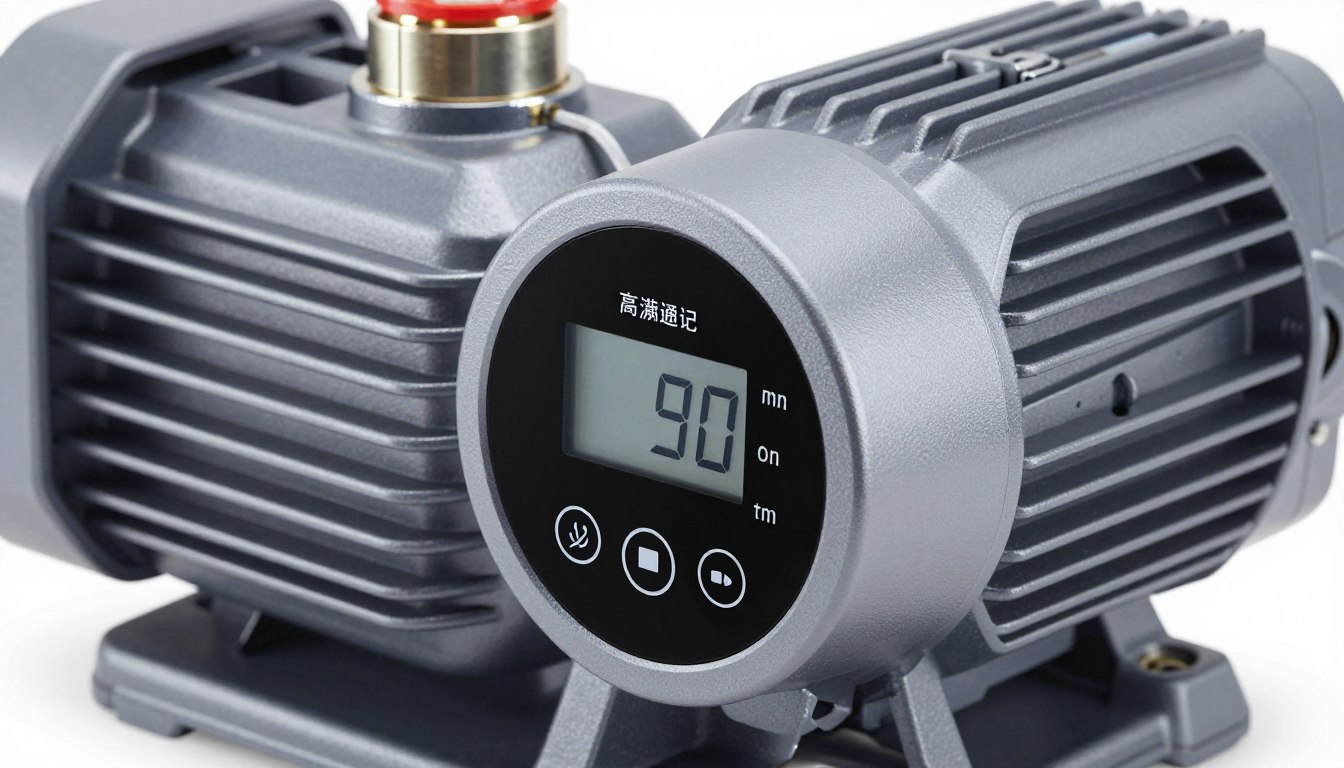
Most central heating pumps run on a dial marked I, II and III, and setting II (medium) is the right starting point for most UK homes. The real test isn’t the number on the dial though, it’s whether every radiator in the house gets properly hot within about 20 minutes. If a radiator furthest from the boiler stays lukewarm, you need more speed. If your boiler keeps cutting out or your pump is loud, you may have too much.
| Question | Short Answer |
|---|---|
| What speed should I use? | Speed II (medium) for most homes. Smaller flats can often run on Speed I, larger houses with many radiators may need Speed III. |
| Does every boiler have an adjustable pump? | No. Most modern combi boilers have a built-in pump with no manual dial. Separate 3-speed pumps are mostly found with system and regular (heat-only) boilers. |
| Speed too high? | Noisy pump and pipework, higher electricity use, and water returning to the boiler too warm. |
| Speed too low? | Cold spots in radiators, especially the ones furthest from the boiler, and a boiler that can overheat and cut out. |
| Can I change it myself? | Yes, on pumps with an external dial. Turn the heating off first and give it 15 to 20 minutes to cool. |
Does Your Pump Even Have a Speed Setting?
Before you go looking for a dial, it’s worth checking you actually have one. If you’ve got a combi boiler, which is the most common setup in UK homes now, the central heating pump is usually built into the casing and often modulates automatically rather than offering a manual I, II, III switch. Nothing to adjust there.
A separate pump you can physically see and turn a dial on is far more common on system boilers and older regular (heat-only) boilers, where the pump sits on its own section of pipework, usually near the boiler or hot water cylinder. If that’s your setup, the rest of this guide applies directly to you.
What Speed Should Your Pump Be On?
There’s no single correct number, it depends on how many radiators you’re heating and how far the water has to travel to reach them. As a general starting point:
| Home Type | Typical Radiator Count | Starting Speed |
|---|---|---|
| Small flat or 1-2 bed home | Up to 6 | Speed I (low) |
| Average 3-4 bed semi or terrace | 7 to 12 | Speed II (medium) |
| Large or detached 5+ bed home | 13 or more | Speed III (high) |
| Long pipe runs, underfloor heating zones, or a recently extended system | Varies | Speed II or III |
Treat this as a starting point rather than a rule. The only way to know for sure is the radiator test further down.
If you’ve got underfloor heating, it’s worth knowing that most underfloor systems run through their own manifold with a separate pump and mixing valve, keeping the water much cooler (typically 35 to 45°C) than a radiator circuit needs. Your main heating pump’s speed still matters for getting hot water to that manifold in the first place, but the underfloor loop itself is usually controlled independently rather than by the same I, II, III dial.
How to Find and Change Your Pump Speed
Your pump is normally a small cylindrical unit with a control panel or dial on the front, usually within a metre or so of the boiler or hot water cylinder. The speed control itself is one of a few types: a rotary dial numbered I to III, a button with indicator lights, or on newer models a small digital display with up and down buttons.
Before you touch anything, turn the heating off at the thermostat or boiler and give the system 15 to 20 minutes to cool. You don’t need to drain anything or open up any pipework, just turn the dial or press the button to the setting you want and switch the heating back on.
One safety point worth knowing: when you turn your heating off, most boilers keep the pump running for another 5 to 10 minutes on purpose. It’s called pump overrun, and it clears the last of the heat out of the boiler’s heat exchanger so nothing overheats. Never cut power to the pump at an isolator switch while the boiler’s still warm, let that overrun finish naturally first.
The Radiator Test
Once you’ve changed the setting, this is how you check it worked:
- Set your thermostat high enough that the heating stays on for the test.
- Wait around 20 minutes, then feel every radiator in the house, paying particular attention to the ones furthest from the boiler.
- Each radiator should be evenly warm across its whole surface, not just hot at one end or cold at the top.
- If everything’s warm, you’re on the right speed. If one or two radiators are still lukewarm, especially the far ones, move up one speed and repeat the test.
- If radiators heat up fine but the pump’s noticeably noisy, try dropping one speed instead.
Bleed any radiators with trapped air before you run this test, air in the system will throw off the results regardless of pump speed.
Signs Your Pump Speed Is Wrong
| What You’re Noticing | Likely Cause |
|---|---|
| Radiators furthest from the boiler stay cool | Speed too low for the size of the system |
| Boiler keeps cutting out or restarting | Speed too low, water isn’t circulating fast enough to meet the boiler’s minimum flow rate |
| Humming, whooshing or banging from the pump or pipework | Speed too high for your system, or a worn pump |
| Noticeably higher electricity use with no other change | Speed set higher than the system actually needs |
| Radiators heat unevenly across different rooms | Could be speed, but also worth checking for trapped air or a balancing issue first |
If pump noise is your main issue rather than heating performance, our guide to a noisy central heating pump goes through every noise type in detail, from gurgling to grinding, and what each one means. If the pump isn’t running at all, see our separate guide on a central heating pump not working.
How Much Does Pump Speed Actually Affect Your Energy Bill?
Less than most people expect, but it’s not nothing either. A fixed-speed pump uses more electricity on a higher setting because the motor’s working harder, though exactly how much depends on the pump model.
As a real example, Grundfos publishes power consumption of 7 to 48 watts across the three speeds on its UPS2 15-50/60, a common domestic circulator pump. Using Ofgem’s current national average electricity price cap rate of around 26p per kWh, running that pump 8 hours a day through a roughly six-month heating season works out at somewhere in the region of £3 a year on the lowest speed and £18 a year on the highest. That’s a difference of around £15 a year for this particular pump, not the boiler itself, just the pump motor.
Other pump models will draw more or less power, and your actual running hours, local tariff and system size all change the number. The honest takeaway is that the lowest speed that still heats every radiator properly will always cost you less to run than a higher one, but it’s a modest saving rather than a dramatic one.
Variable-Speed Pumps: Are They Worth Upgrading To?
Rather than a fixed I, II, III dial, a variable-speed pump (sometimes labelled “electronic,” “ECO” or “auto-adapt”) senses how hard the system needs to work and adjusts itself continuously, often idling down to just a few watts when demand is low. Popular models include the Grundfos Alpha and Wilo Stratos ranges.
The main benefits are lower running costs, quieter operation, and one less thing to think about, since there’s no dial to get wrong in the first place. The trade-off is the upfront cost of the unit and fitting. If you’re not sure whether it’s worth it for your home, a BeFix engineer can look at your system and give you a proper answer rather than a generic one, and can talk you through current pricing for a pump replacement at the same time.
What to Expect When You Book a BeFix Pump Check
If you’d rather not guess, a BeFix engineer can check your pump speed against your actual system, not just a rule of thumb, as part of a routine visit. They’ll check flow rate, look for any airlocks or sludge that might be masking the real problem, and adjust the setting properly. If the setting turns out not to be the problem and the pump itself needs swapping out, BeFix charges from £150 if it’s just the unit, or £280 for a full replacement with parts and labour included, regardless of brand. Both figures are exclusive of VAT.
FAQs
What speed should my central heating pump be on?
Speed II (medium) works for most homes. Smaller properties with fewer radiators can often run on Speed I, and larger homes with many radiators or long pipe runs may need Speed III. The radiator test above is the reliable way to confirm it for your specific home.
Why doesn’t my boiler have a pump speed dial?
Most combi boilers have the pump built into the casing, and it’s either fixed or modulates automatically, so there’s no external dial. You’ll usually only find a manual I, II, III selector on system boilers and older regular boilers with a separate pump.
Can setting my pump speed too high damage anything?
It’s more likely to cause noise, wasted electricity and faster wear on the pump itself than serious damage, though water returning to the boiler too warm can reduce its efficiency over time.
Will a higher pump speed fix my noisy radiators?
Not usually, and it can make noise worse rather than better. Radiator noise is more often trapped air, sludge or limescale than an incorrect speed setting. Our noisy central heating pump guide covers how to tell the difference.
How do I know if my pump needs replacing rather than just adjusting?
If you’ve tried the radiator test at different speeds and you’re still getting cold spots, or the pump is grinding, leaking, or won’t run at all, that points to a fault rather than a setting, and it’s worth getting a Gas Safe registered engineer to take a look.
Is it worth upgrading to a variable-speed pump?
It depends on your current pump, how old it is, and how much you’re paying to run it now. The running-cost difference between speeds on most domestic pumps is modest, so it’s worth asking an engineer to look at your specific setup before deciding.
What’s a normal flow rate for a central heating pump?
It varies by system size and pump model, so there’s no single “normal” figure, but your boiler’s manual will usually state the minimum flow rate it needs to run safely. Pump speed is really just a way of controlling that flow rate: a higher speed pushes more water through per minute, a lower speed pushes less. If your boiler keeps cutting out, it’s often because the flow rate has dropped below what the boiler needs, whether that’s from a low pump speed, trapped air, or sludge restricting the pipework.
Does pump speed affect underfloor heating?
Indirectly. Most underfloor heating runs off its own manifold with a separate pump and mixing valve, so your main circulator’s I, II, III setting doesn’t control the underfloor loop directly. What it does affect is how well the manifold itself gets supplied with hot water, so a speed that’s too low can still leave an underfloor zone running cooler than it should.
How often should I check my pump speed setting?
There’s no fixed schedule. It’s worth checking after any change to your system, such as adding a radiator, an extension, or a power flush, and it’s a sensible thing for an engineer to glance at during your annual boiler service.
Can I check my pump speed without turning the heating off?
You can look at what speed it’s currently set to without switching anything off, the dial or display just shows the current setting. Changing it is what needs the heating off and a short cooling period first, as covered above.
Still Not Sure What Speed Your Pump Should Be On?
Run through the radiator test above and you’ll usually have your answer within half an hour. If your radiators still aren’t heating evenly, or you’d rather have someone check it properly, BeFix’s Gas Safe registered engineers can do it for you. Call BeFix on 020 8058 4241 to book one in.
Leave A Comment