

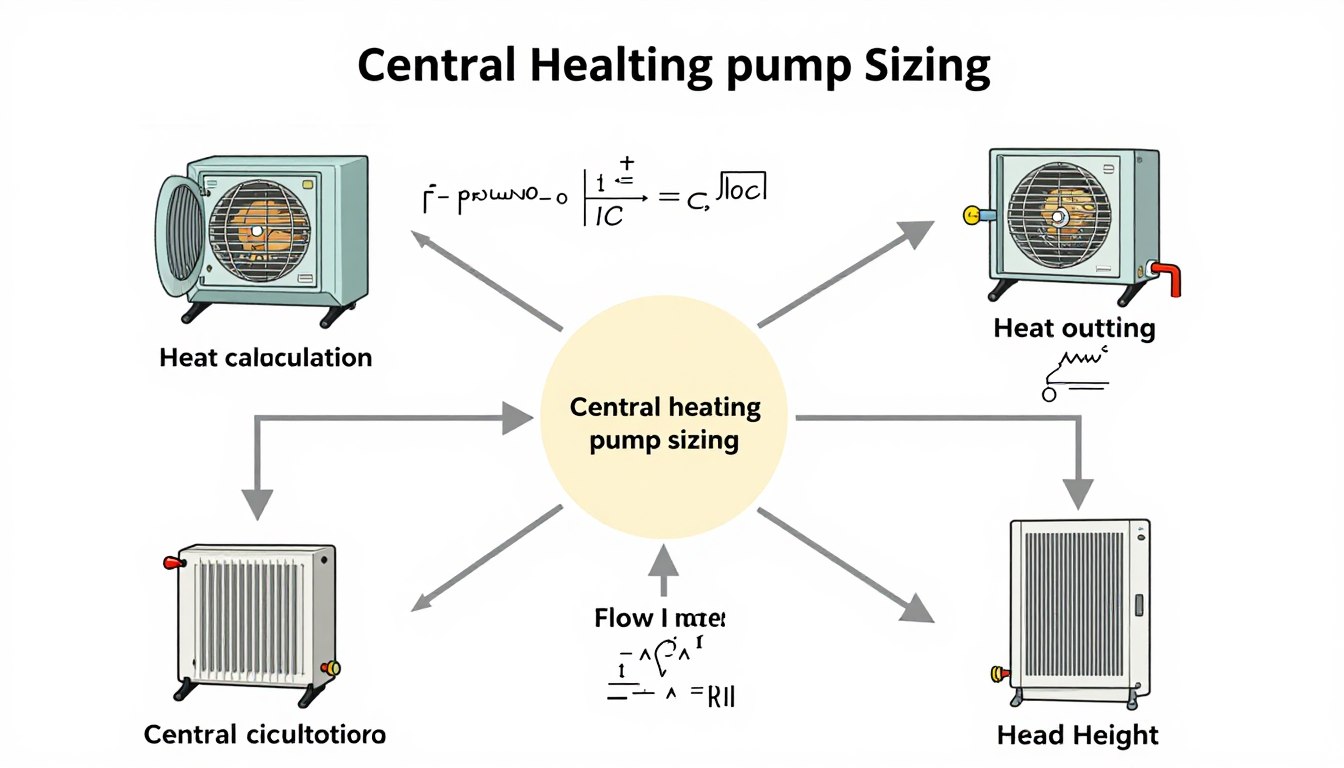
| Section | Key Idea | Important Details |
|---|---|---|
| Pump Sizing Importance | Correct pump size ensures efficient heating | Incorrect sizing can cause cold spots, noise, high energy bills, and system wear. |
| System Efficiency | Proper pump size saves energy | Oversized pumps waste electricity; undersized pumps force the boiler to work harder. |
| Heating Performance | Correct sizing distributes heat evenly | Prevents temperature differences between rooms and floors. |
| System Longevity | Proper pumps reduce system stress | Leads to fewer breakdowns and longer lifespan of pump and boiler. |
| Flow Rate | Volume of water circulated per hour | Measured in m³/h or L/h. Depends on heat demand, radiator size/number, and temperature difference. |
| Head Height | Resistance the pump must overcome | Measured in meters. Influenced by pipe length, vertical height, bends, valves, and pipe diameter. |
| Typical Pump Sizes | Different homes require different pump capacity | Flats need lower flow/head; large houses require higher flow rates and higher head height. |
| Oversized Pump Problems | Too powerful pumps cause issues | Higher electricity use, noise, poor heat transfer, cavitation, and component wear. |
| Undersized Pump Problems | Weak pumps cannot circulate water properly | Causes cold rooms and uneven heating. |
| Heat Output Calculation | Determines heating demand | Approx. 60–120 W per m² depending on insulation level. |
| Flow Rate Formula | Used to estimate required circulation | Flow Rate = Heat Output × 0.86 ÷ Temperature Difference. |
| Head Height Estimate | Based on building height and pipe resistance | 2–3 m for single floor, 3–5 m for two floors, 5+ m for larger systems. |
| Professional Assessment | Needed for complex heating systems | Important for zoned heating, underfloor heating, large homes, or unusual layouts. |
Why Correct Central Heating Pump Sizing Matters
Effects of correct vs incorrect pump sizing on heating system performance
The central heating pump is the heart of your heating system, responsible for circulating hot water from your boiler to radiators throughout your home. Getting the size right is not just about comfort—it directly impacts:
System Efficiency
An oversized pump wastes electricity by working harder than necessary. An undersized pump struggles to circulate water effectively, causing your boiler to work overtime. Both scenarios lead to increased energy consumption and higher bills.
Heating Performance
Proper sizing ensures even heat distribution throughout your home. With incorrect sizing, you may experience cold spots in rooms furthest from the boiler or inconsistent heating across different floors.
System Longevity
A correctly sized pump reduces wear and tear on your entire heating system. This means fewer breakdowns, less maintenance, and a longer lifespan for both the pump and your boiler.
Understanding Key Pump Sizing Concepts
Before diving into specific sizing recommendations, it’s essential to understand two fundamental concepts that determine pump selection: flow rate and head height.
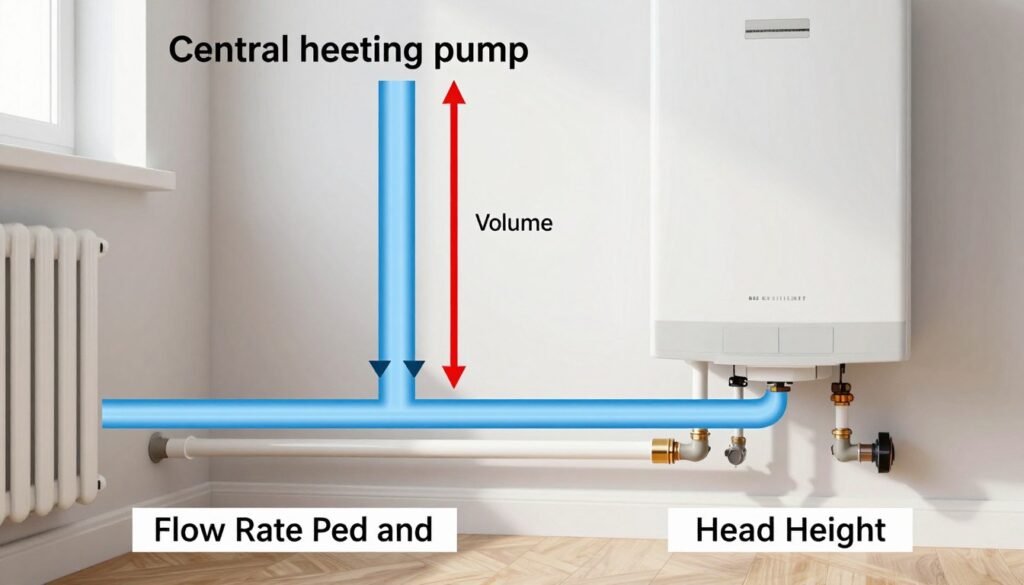
The two key factors in central heating pump sizing: flow rate and head height
Flow Rate Explained
Flow rate refers to the volume of water a pump can move through your heating system in a given time period. It’s typically measured in liters per hour (l/h) or cubic meters per hour (m³/h).
Think of flow rate as how quickly water circulates through your radiators. Just like a river, if the flow is too slow, heat won’t reach distant areas effectively. If it’s too fast, the water may not have enough time to release its heat properly.
The required flow rate depends primarily on:
- The total heat output needed for your home (usually measured in kilowatts)
- The number and size of radiators in your system
- The temperature difference between the water flowing into and out of your radiators
Head Height (or Head Loss) Explained
Head height represents the resistance that the pump must overcome to move water through your heating system. It’s measured in meters (m) and is sometimes called “head loss” or simply “head.”
Imagine pushing water uphill through a garden hose. The higher and longer the hill, the more pressure you need. Similarly, your heating pump needs to overcome resistance from pipes, bends, valves, and height differences in your home.
The required head height is influenced by:
- The vertical distance between the lowest and highest points in your heating system
- The total length of pipework
- The number of bends, valves, and other fittings that create resistance
- The diameter of your pipes (smaller pipes create more resistance)
Typical House Examples and Pump Sizing
While every home is unique, these examples provide general guidance based on common property types. Remember that these are starting points—your specific requirements may vary based on insulation, layout, and other factors.
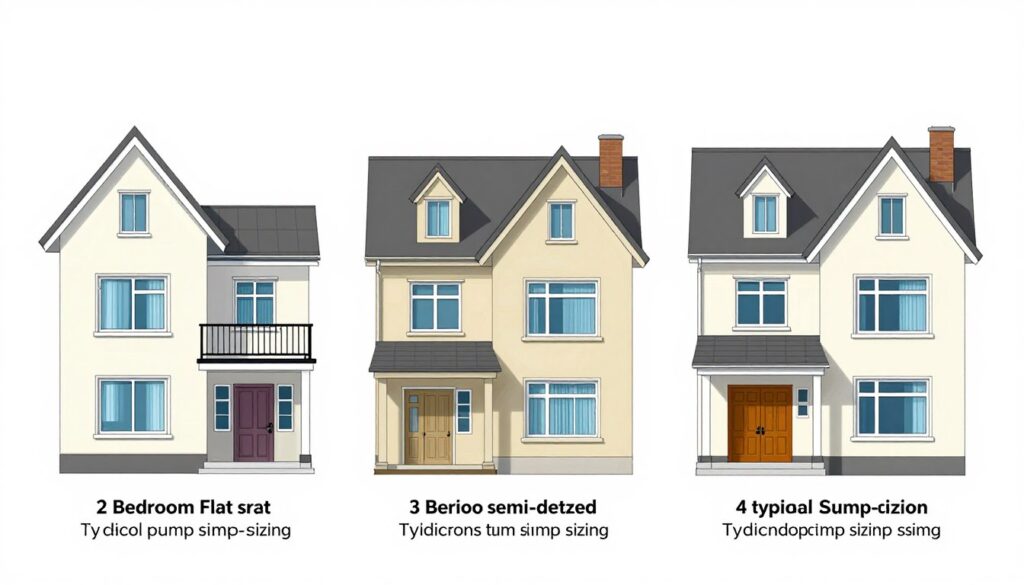
Typical pump sizing requirements for different property types
| Property Type | Typical Flow Rate | Typical Head Height | Key Considerations |
| 2-Bedroom Flat | 0.5-1.0 m³/h | 2-3 m | Single level with shorter pipe runs typically requires less powerful pumps. Consider insulation quality and radiator sizes. |
| 3-Bedroom Semi-Detached | 1.0-1.5 m³/h | 3-5 m | Two floors increase head height requirements. Pipe layout complexity and number of radiators are important factors. |
| 4-Bedroom Detached | 1.5-2.5 m³/h | 4-6 m | Larger floor area and potentially more complex pipework. May require higher capacity, especially with multiple bathrooms or underfloor heating. |
| Large House (5+ Bedrooms) | 2.5+ m³/h | 5-7+ m | May benefit from zoned heating systems or multiple pumps. Professional assessment highly recommended. |
Important Note: These figures are general guidelines only. Your specific requirements may vary based on insulation levels, window types, ceiling heights, and other factors that affect heat loss and system resistance.
Common Questions About Central Heating Pump Sizing
What size pump do I need for my central heating?
The correct pump size depends on your specific heating system requirements, primarily determined by:
- The heat output needed for your property (related to size and insulation)
- The resistance in your system (pipe length, bends, valves, and height)
- The number and type of radiators or underfloor heating zones
For most standard residential properties, pumps with flow rates between 0.5-2.5 m³/h and head heights of 2-6 meters are common. However, for precise sizing, consider using a sizing calculator or consulting with a heating engineer.
Can a central heating pump be too powerful?
Yes, an oversized pump can cause several problems:
- Increased energy consumption and higher electricity bills
- Noise issues from water moving too quickly through pipes and radiators
- Reduced heat transfer efficiency as water moves through radiators too quickly
- Potential for cavitation (formation of vapor bubbles) that can damage the pump
- Accelerated wear on system components
Modern variable speed pumps can mitigate some of these issues by adjusting their output, but proper sizing remains important for optimal efficiency.
How do I know if my current pump is correctly sized?
Signs that your current pump may be incorrectly sized include:
Undersized Pump:
- Cold spots in rooms furthest from the boiler
- Significant temperature difference between upstairs and downstairs
- Pump running constantly but struggling to maintain temperature
Oversized Pump:
- Noisy operation (rushing water sounds)
- Radiators heating unevenly
- Higher than expected electricity consumption
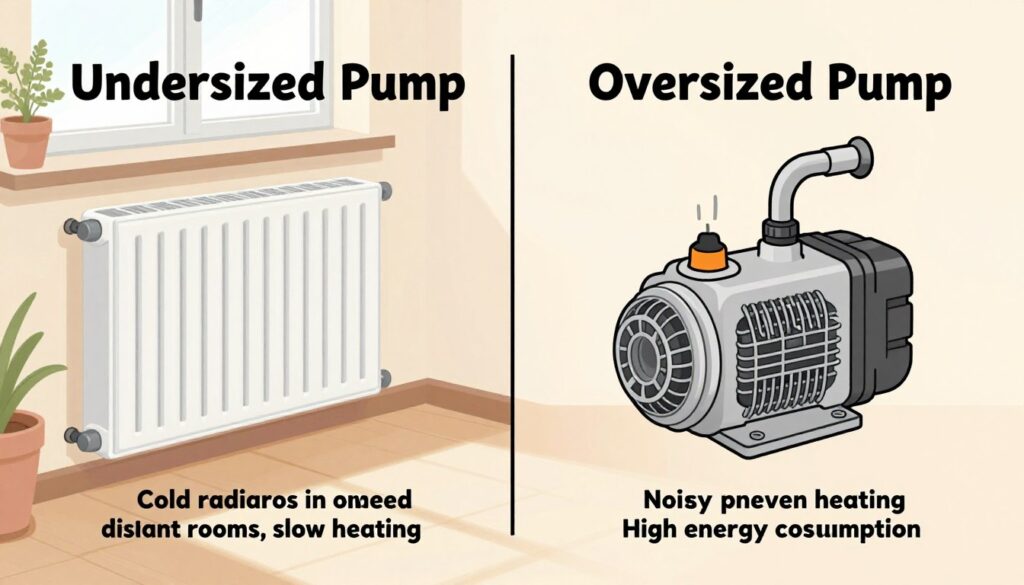
Signs that your central heating pump may be incorrectly sized
Understanding Pump Sizing Calculations
While professional calculations can be complex, understanding the basic principles behind pump sizing can help you make more informed decisions.
Basic principles behind pump sizing calculations
Heat Output Calculation
The first step is determining your home’s heat requirement, typically measured in kilowatts (kW):
- For well-insulated properties: approximately 60-80 watts per square meter
- For moderately insulated properties: approximately 80-100 watts per square meter
- For poorly insulated properties: approximately 100-120+ watts per square meter
Flow Rate Determination
Once you know the heat requirement, you can calculate the approximate flow rate needed:
Flow Rate (m³/h) = Heat Output (kW) × 0.86 ÷ Temperature Difference (°C)
Where temperature difference is typically 10-20°C between flow and return pipes in a central heating system.
Head Height Calculation
Calculating head height is more complex as it involves:
- Static head: The vertical distance between the highest and lowest points in your system
- Friction head: Resistance created by pipes, bends, valves, and fittings
For most residential systems:
- Single-story properties typically require 2-3 meters head
- Two-story properties typically require 3-5 meters head
- Larger or more complex systems may require 5+ meters head
Pump Sizing Calculators: Various online calculators can help estimate your requirements based on property type, size, and heating system configuration. While these provide useful starting points, they should be used as guides rather than definitive answers.
When to Seek Professional Assessment
While this guide provides a solid foundation for understanding central heating pump sizing, certain situations warrant professional expertise:
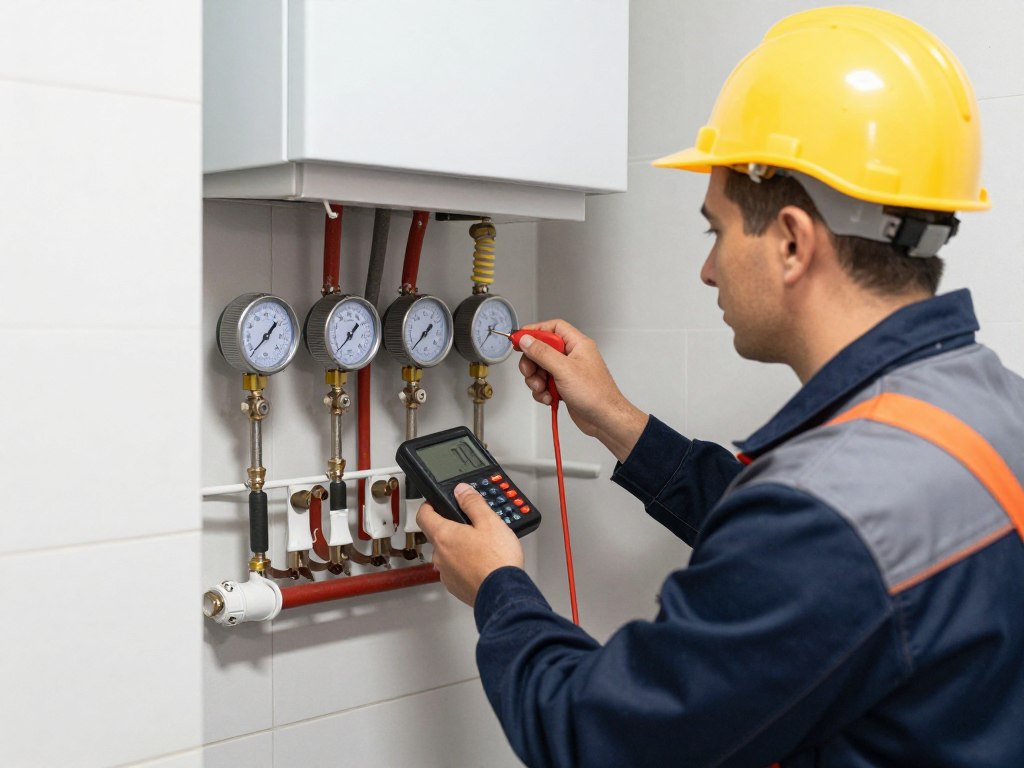
A professional assessment ensures optimal pump sizing for complex systems
Complex Systems
- Properties with multiple heating zones
- Systems combining radiators and underfloor heating
- Homes with unusual layouts or multiple floors
- Properties with extensions or significant modifications
Special Considerations
- High-efficiency or low-temperature heating systems
- Properties with unusual heat loss characteristics
- Systems with buffer tanks or thermal stores
- Integration with renewable energy sources
A qualified heating engineer can perform a detailed assessment including:
- Comprehensive heat loss calculations for your specific property
- Detailed measurement of your system’s resistance (head loss)
- Evaluation of your existing pipework and radiator configuration
- Recommendations for optimal pump specifications and settings
Need Expert Advice?
For complex heating systems or if you’re unsure about your specific requirements, consulting with a qualified heating engineer is recommended. They can provide personalized advice based on your home’s unique characteristics.
Central Heating Pump Sizing: Summary Reference
Use this comprehensive reference table to guide your central heating pump sizing decisions:
| Factor | Description | Typical Values | Impact on Sizing |
| Property Size | Total heated floor area | Small: <100m² Medium: 100-200m² Large: >200m² |
Larger properties generally require higher flow rates |
| Insulation Level | Quality of thermal insulation | Poor: 100-120+ W/m² Average: 80-100 W/m² Good: 60-80 W/m² |
Better insulation reduces required pump capacity |
| Number of Floors | Vertical distance in system | Single story: 2-3m head Two story: 3-5m head Three+ story: 5-7m+ head |
More floors increase head height requirements |
| Pipe Configuration | Length and complexity of pipework | Simple: Few bends/valves Complex: Many bends/valves |
Complex configurations increase resistance (head) |
| Radiator Count | Number of heat emitters | Few: <8 radiators Average: 8-12 radiators Many: >12 radiators |
More radiators typically require higher flow rates |
| Special Features | Additional heating elements | Underfloor heating Towel rails Fan convectors |
May require specific flow characteristics |
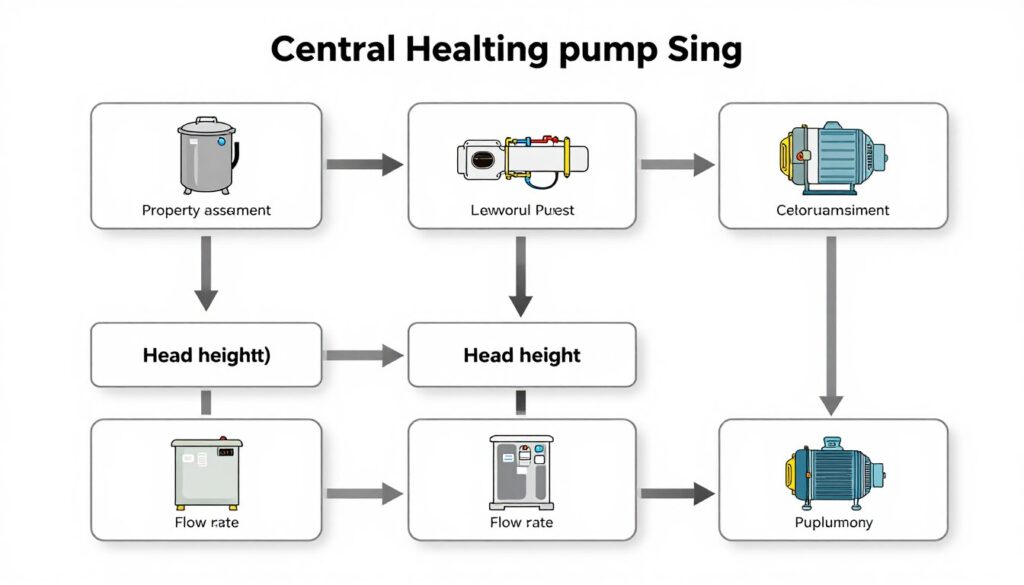
Decision flowchart for central heating pump sizing
Ready to Size Your Central Heating Pump?
Use the information in this guide along with our summary table to determine the appropriate pump specifications for your heating system. For complex systems, consider consulting with a heating professional.
Conclusion
Selecting the right size central heating pump is a critical decision that impacts your home’s comfort, energy efficiency, and heating system longevity. By understanding the key concepts of flow rate and head height, and considering your specific property characteristics, you can make an informed choice.
Remember that while general guidelines are helpful, every heating system has unique requirements. When in doubt, it’s always worth consulting with a qualified heating engineer who can provide personalized advice based on a detailed assessment of your property and heating system.
With the right pump in place, you’ll enjoy consistent warmth throughout your home while minimizing energy consumption and maintenance costs for years to come.
Leave A Comment