

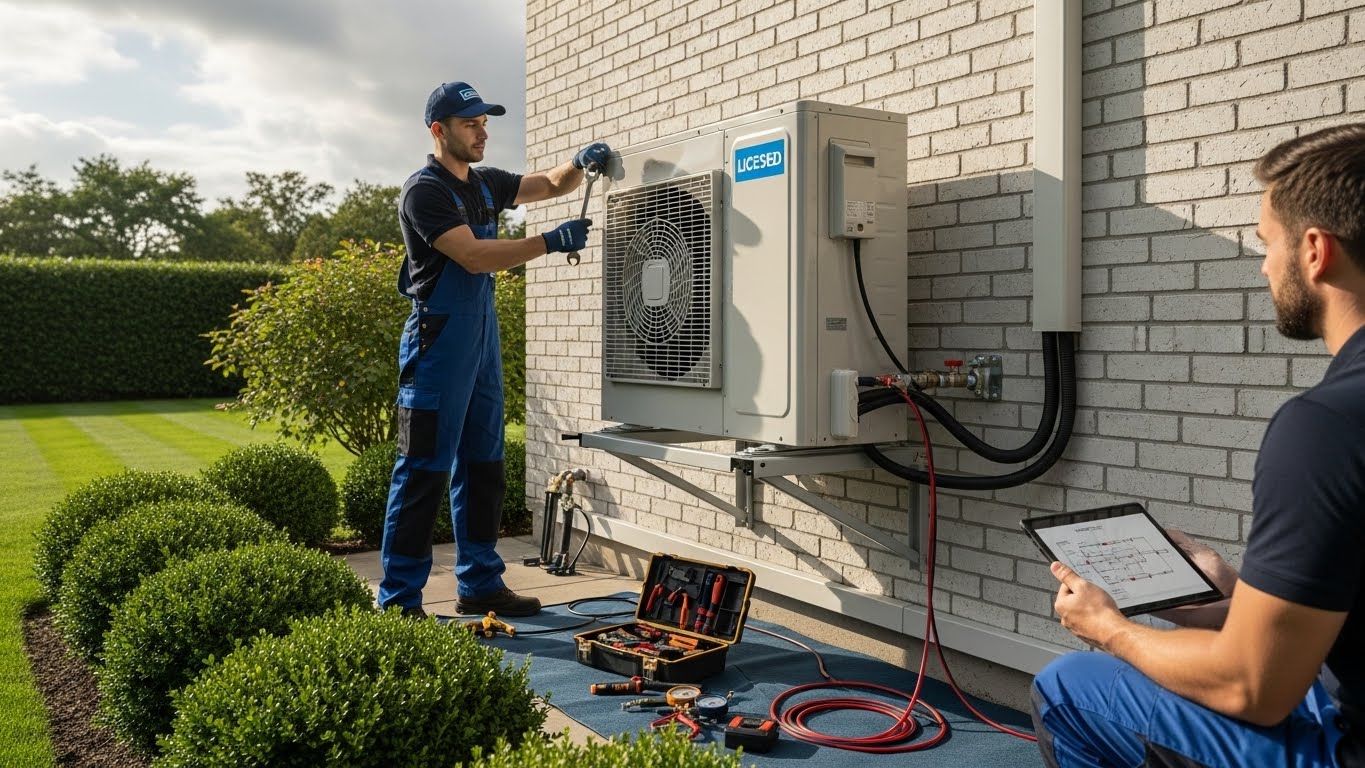
We’re excited to guide you through the process of Air to Air Heat Pump Installation, providing you with valuable cost breakdowns and expert installation tips! At our company, we prioritize customer satisfaction and aim to simplify property maintenance by delivering transparent and reliable services.
Installing an air-to-air heat pump can be a great way to heat your UK home efficiently. In this article, we’ll explore the ins and outs of heat pump cost and installation, helping you make informed decisions for your property.
Key Takeaways
- Understanding the cost of air-to-air heat pump installation
- Expert tips for a smooth installation process
- Factors affecting heat pump cost in the UK
- Benefits of choosing an air-to-air heat pump
- How to ensure a reliable installation service
What Are Air-to-Air Heat Pumps?
Understanding air-to-air heat pumps is key to unlocking a more energy-efficient home. As homeowners in the UK look for alternatives to traditional heating systems, air-to-air heat pumps are becoming an increasingly popular choice. But what exactly are they, and how do they work?
How Air-to-Air Heat Pumps Work
Air-to-air heat pumps operate by transferring heat from outside air into your home. This process involves an outdoor unit that absorbs heat from the ambient air, even in cold temperatures, and an indoor unit that releases this heat into your living space. The system uses refrigerant to facilitate this heat transfer, providing a efficient heating solution.
Differences from Other Heating Systems
Unlike traditional heating systems that generate heat through combustion or electric resistance, air-to-air heat pumps simply move heat from one location to another. This fundamental difference makes them highly efficient, as they can provide more energy than they consume.
Efficiency and Environmental Benefits for UK Homes
Air-to-air heat pumps offer significant environmental benefits by reducing carbon emissions. They are particularly effective in well-insulated homes and can be a crucial component of a sustainable heating strategy. Here’s a comparison of the efficiency of different heating systems:
| Heating System | Efficiency Rating | Environmental Impact |
|---|---|---|
| Air-to-Air Heat Pumps | 300-400% | Low Carbon Emissions |
| Traditional Electric Heating | 100% | Higher Carbon Emissions |
| Gas Boilers | 80-90% | Moderate Carbon Emissions |
By choosing an air-to-air heat pump, UK homeowners can enjoy a more energy-efficient and environmentally friendly heating solution. As we continue to explore the benefits and installation process, you’ll be better equipped to decide if this system is right for your home.
Types of Air-to-Air Heat Pump Systems
Air-to-air heat pump systems come in various configurations, each designed to meet specific needs and preferences. Whether you’re looking to heat a small home or a larger property, understanding the different types available is crucial for making an informed decision.
Split Systems vs. Packaged Units
One of the primary distinctions in air-to-air heat pump systems is between split systems and packaged units. Split systems consist of an outdoor unit and one or more indoor units, connected by refrigerant lines. This setup allows for greater flexibility and can be more aesthetically pleasing as the indoor units are less obtrusive. On the other hand, packaged units are self-contained systems where all components are housed in a single outdoor unit. These are often preferred for their simplicity and ease of installation.
Ducted vs. Ductless Mini-Split Options
Another important consideration is whether to opt for ducted or ductless mini-split systems. Ducted systems use existing ductwork to distribute heated or cooled air throughout the home, making them a good choice if you already have a duct system in place. Ductless mini-splits, however, don’t require ductwork and are ideal for homes without existing ducts or for zoning specific areas.
Multi-Zone Systems for Larger Properties
For larger properties or homes with multiple floors, multi-zone systems can be highly effective. These systems allow you to control the temperature in different areas or zones independently, providing both comfort and energy efficiency. By only heating or cooling the areas that need it, you can potentially save on energy costs.
Popular Models Available in the UK Market
The UK market offers a variety of air-to-air heat pump models from reputable manufacturers. Some popular choices include systems from brands like Daikin, Mitsubishi, and Panasonic. When selecting a model, it’s essential to consider factors such as efficiency ratings, noise levels, and compatibility with your home’s existing heating system.
Complete Air to Air Heat Pump Installation Costs
When considering an air to air heat pump for your home, it’s essential to grasp the various costs involved in the installation process. We understand that transparency is key, and that’s why we’re breaking down the costs associated with air to air heat pump installation.
Equipment Costs by System Size and Type
The cost of the air to air heat pump equipment itself is a significant factor in the overall installation cost. The price varies depending on the system size and type. For instance, a smaller system suitable for a single room might cost between £500 to £1,000, while a larger system for an entire house can range from £2,000 to £5,000 or more. We recommend consulting with a professional to determine the most appropriate system size for your home.
Labor and Professional Installation Expenses
Labor costs are another crucial component of the total installation expense. Professional installation is highly recommended to ensure the system operates efficiently and safely. Labor costs can vary depending on the complexity of the installation and the installer’s rates. On average, you might expect to pay between £1,000 to £3,000 for professional installation services.
Additional Components and Accessories
Beyond the heat pump unit and labor, there are additional components and accessories that may be required, such as mounting hardware, refrigerant lines, and electrical connections. These extras can add several hundred to several thousand pounds to the total cost, depending on the specific requirements of your installation.
UK Government Incentives and Energy Saving Schemes
To help offset the costs, the UK government offers various incentives and energy-saving schemes. For example, the Boiler Upgrade Scheme provides grants to homeowners who replace their old boilers with heat pumps. We encourage you to explore these opportunities to reduce your upfront costs and enhance the long-term savings of your air to air heat pump system.
By understanding these different cost components and available incentives, you can make a more informed decision about your air to air heat pump installation. We are committed to helping you navigate this process and ensuring that you achieve the best possible outcome for your home.
Pre-Installation Assessment and Planning
A thorough pre-installation assessment is key to ensuring your air-to-air heat pump works efficiently. We need to consider several factors to ensure a smooth and effective installation process.
Home Energy Audit Requirements
Before installing an air-to-air heat pump, we recommend conducting a home energy audit to determine your energy needs. This assessment helps identify areas of energy loss and ensures the heat pump is appropriately sized for your home.
Correctly Sizing Your Heat Pump System
System sizing is critical for the efficiency and effectiveness of your heat pump. We use the data from your home energy audit to size the system correctly, ensuring it meets your heating demands without wasting energy.
Evaluating Existing Ductwork or Planning New Routes
If you’re retrofitting an existing system, we evaluate the condition and suitability of your current ductwork. For new installations, we plan the most efficient duct routes to minimize energy loss and optimize performance.

Electrical Requirements and Potential Upgrades
We assess your home’s electrical requirements to ensure they align with the heat pump’s needs. This may involve upgrading your electrical panel or making other necessary adjustments to support the new system.
Planning Permission and Building Regulations in the UK
Navigating planning permission and building regulations is a crucial step. We guide you through the process, ensuring compliance with UK regulations and obtaining any necessary permits.
| Assessment Factor | Description | Importance |
|---|---|---|
| Home Energy Audit | Determines energy needs and identifies energy loss areas | High |
| System Sizing | Ensures the heat pump is appropriately sized for your home | High |
| Electrical Requirements | Assesses and upgrades electrical systems as necessary | High |
| Planning Permission | Ensures compliance with UK building regulations | High |
DIY vs. Professional Air to Air Heat Pump Installation
Professional installation ensures your air-to-air heat pump operates efficiently and safely. While some homeowners might consider DIY installation to save on costs, the complexity of these systems often necessitates professional expertise.
When Professional Installation is Necessary
Professional installation is crucial for ensuring that your air-to-air heat pump is installed correctly and operates at its optimal level. This is particularly important for complex systems that require precise setup and calibration.
Finding and Vetting Qualified Installers
To find a qualified installer, look for professionals with experience in air-to-air heat pump installations. Check for reviews, ask for references, and verify their certifications. We recommend getting quotes from at least three different installers to compare prices and services.
| Certification | Description | Importance Level |
|---|---|---|
| MCS Certification | Microgeneration Certification Scheme for renewable energy installers | High |
| TrustMark | Government-endorsed quality assurance scheme for work in homes | Medium |
| City & Guilds | Industry-recognized qualification for installers | High |
What Parts of Installation You Can Do Yourself
While we strongly advise against DIY installation for complex tasks, some simpler tasks like preparing the installation site or ensuring the area is clear can be done by homeowners. However, always consult with your installer to understand what you can safely do yourself.
Required Certifications for UK Installers
In the UK, installers of air-to-air heat pumps need to have specific certifications, such as MCS (Microgeneration Certification Scheme) certification. Ensuring your installer has these certifications is crucial for the validity of your warranty and the safety of the installation.
Step-by-Step Air to Air Heat Pump Installation Process
The installation of an air-to-air heat pump involves several key steps to ensure efficient and safe operation. We will guide you through the process, highlighting the crucial elements that require attention.
Outdoor Unit Placement and Mounting
The outdoor unit is a critical component of the air-to-air heat pump system. Proper placement is essential to ensure optimal performance and longevity. We recommend placing the unit in a well-ventilated area, away from direct sunlight and moisture. The unit should be mounted on a sturdy bracket or base to minimize vibrations and noise.

Indoor Air Handler Installation
The indoor air handler is responsible for distributing the heated or cooled air throughout your home. Correct installation is vital to ensure efficient airflow and comfort. We suggest installing the air handler in a location that allows for easy maintenance and is not obstructed by furniture or other objects.
Refrigerant Line Connection and Insulation
Connecting the refrigerant lines between the outdoor and indoor units requires precision. Proper insulation of these lines is crucial to prevent energy loss and maintain system efficiency. We advise using high-quality insulation materials and ensuring that the connections are secure and leak-free.
Electrical Wiring and Control System Setup
The electrical wiring and control system setup are critical for the safe and efficient operation of your air-to-air heat pump. It’s essential to follow the manufacturer’s instructions and local electrical codes. We recommend hiring a qualified electrician if you’re unsure about any aspect of the wiring or control system setup.
System Pressure Testing and Commissioning
Once the installation is complete, the system must be pressure tested to ensure there are no leaks. Commissioning the system involves checking that it operates correctly and efficiently. We emphasize the importance of this step to guarantee the system’s performance and longevity.
Final Checks and Safety Testing
Before completing the installation, we conduct final checks to ensure that the system is safe and functioning as expected. This includes checking for any refrigerant leaks, verifying electrical connections, and testing the system’s overall performance. Safety testing is paramount to prevent any potential hazards or issues.
Overcoming Common Installation Challenges
As you plan to install an air-to-air heat pump, it’s essential to anticipate potential challenges, such as weather protection and condensate drainage issues. We understand that a successful installation requires careful planning and execution. In this section, we’ll explore common installation challenges and provide practical solutions to ensure a smooth and efficient process.
Limited Outdoor Space Solutions
One of the common challenges is limited outdoor space for the installation of the heat pump’s outdoor unit. We recommend assessing the available space carefully and considering compact or wall-mounted units that can fit into smaller areas. Additionally, utilizing vertical space or opting for a ducted system can help mitigate space constraints.
Noise Reduction Techniques
Noise reduction is another critical aspect, as air-to-air heat pumps can generate some noise during operation. To minimize disturbance, we suggest installing the outdoor unit away from neighboring properties or using noise-reducing enclosures. Regular maintenance also plays a crucial role in keeping the noise level down.
Weather Protection for UK Climate Conditions
The UK’s varied climate means that weather protection is vital for the longevity and efficiency of the heat pump. We advise selecting units with appropriate weather resistance and installing protective measures such as cowls or covers to shield against extreme weather conditions.
Addressing Condensate Drainage Issues
Proper condensate drainage is essential to prevent water damage and ensure the system’s efficiency. We recommend installing a condensate drain pipe that is properly sized and insulated, and ensuring that it is directed away from the building foundation.
Retrofitting Challenges in Older UK Homes
Retrofitting air-to-air heat pumps in older UK homes can present unique challenges, such as outdated electrical systems or lack of suitable ductwork. We suggest conducting a thorough assessment of the property to identify potential issues and develop a tailored installation plan that addresses these challenges.
| Challenge | Solution |
|---|---|
| Limited Outdoor Space | Compact or wall-mounted units, ducted systems |
| Noise Concerns | Noise-reducing enclosures, strategic unit placement |
| Weather Protection | Weather-resistant units, protective cowls or covers |
| Condensate Drainage | Properly sized and insulated drain pipes |
Post-Installation Maintenance and Optimization
Once your air-to-air heat pump is installed, regular upkeep is necessary to maintain its efficiency and effectiveness. We understand the importance of maintaining your system to ensure it continues to provide optimal heating and cooling.
Regular Cleaning and Maintenance Schedule
To keep your system running smoothly, we recommend establishing a regular cleaning and maintenance schedule. This includes checking and cleaning the filters, inspecting the outdoor unit, and ensuring that all connections are secure.
Filter Replacement Guidelines
Filters play a crucial role in maintaining air quality and system efficiency. We advise checking your filters monthly and replacing them every 3-6 months, depending on usage and manufacturer recommendations.
Professional Service Recommendations
While some maintenance tasks can be performed by homeowners, we recommend annual professional servicing to ensure your system is operating at peak performance. Our team of experts can identify potential issues before they become major problems.
Optimizing System Settings for UK Seasonal Changes
To maximize efficiency and comfort, it’s essential to adjust your system settings according to the UK’s seasonal changes. We can provide guidance on how to optimize your system for the varying temperatures and humidity levels throughout the year.
By following these maintenance tips and optimizing your system settings, you can enjoy a comfortable and energy-efficient home all year round. Our team is here to support you every step of the way, ensuring your air-to-air heat pump operates at its best.
Conclusion
We’ve guided you through the process of air to air heat pump installation, highlighting the importance of energy efficiency and proper maintenance. By choosing the right system for your UK home, you’re not only reducing your environmental footprint but also enhancing your comfort and potentially lowering your energy bills.
At our company, we prioritize customer satisfaction above all else. Our commitment to delivering transparent, reliable services ensures that you’re supported every step of the way – from initial assessment to post-installation maintenance. We believe in simplifying property maintenance by providing personalized attention to your needs, ensuring a hassle-free experience.
As you consider air to air heat pump installation for your home, we hope this guide has been informative and helpful. Our team is dedicated to helping you maximize your system’s potential, ensuring you enjoy optimal energy efficiency and comfort throughout the year.
FAQ
What is the average cost of air to air heat pump installation in the UK?
The average cost can range from £1,500 to £6,000 or more, depending on the system size, type, and complexity of the installation.
How long does air to air heat pump installation take?
Installation typically takes between 2 to 5 days, depending on the complexity of the job and the installer’s experience.
Do I need to replace my existing electrical panel for air to air heat pump installation?
It depends on your current electrical setup and the power requirements of the heat pump system. We recommend having a qualified electrician assess your panel to determine if an upgrade is necessary.
Can I install an air to air heat pump myself?
We strongly advise against DIY installation, as it requires specialized knowledge and equipment. Improper installation can lead to safety hazards, reduced efficiency, and voided warranties.
Are air to air heat pumps noisy?
Modern air to air heat pumps are designed to be quiet, with some models operating as low as 20 dB. However, noise levels can vary depending on the specific model and installation.
How often do I need to maintain my air to air heat pump?
We recommend regular maintenance every 6-12 months to ensure optimal performance, efficiency, and longevity of the system.
Can air to air heat pumps provide both heating and cooling?
Yes, air to air heat pumps can provide both heating and cooling, making them a versatile solution for UK homes.
Are there any UK government incentives for air to air heat pump installation?
Yes, there are incentives such as the Boiler Upgrade Scheme, which provides grants for homeowners to install heat pumps, including air to air heat pumps.
How do I choose the right size air to air heat pump for my home?
Sizing depends on various factors, including your home’s insulation, size, and energy needs. We recommend consulting with a qualified installer to determine the correct size for your property.
What is the lifespan of an air to air heat pump?
The average lifespan is around 15-20 years, depending on the quality of the system, maintenance, and usage.
Leave A Comment